Author: Kevin
-
Figuring out the Number of Months Between Days
Figuring out the number of years or months between 2 dates shouldn’t be hard. For some reason though, for a lot of database systems it is. Take, for example, SQL Server. If I want to know the number of months between 1/1/2023 and 7/4/2023, it’s not too hard. A simple DATEDIFF function and we’re golden.…
-
Getting the Minimum or Maximum of One Column
By the title of this post, you’re thinking “Ho hum. Sherpa will tell us about the stupid MIN and MAX functions in Snowflake and how great they are.” Well, they are great. Let’s not kid ourselves about that one. This simply tells us the first employee id in the employees table for each department. Same…
-
Next Friday Will Be Here Before You Know it
Sometimes, you’ll be asked to show the next Friday after a given date in a report. Sometimes, it’s the next Monday. Let’s work thru how to do it in both SQL Server and Snowflake for comparison… One of the two ways we’ll go over in SQL Server is using the DateFirst operator. This operator actually…
-
This is the end… of the month.
In SQL Server, we’re used to finding the end of the month via a few different methods. We can always use the DateAdd and DateDiff functions to get our data – which sometimes takes a bit of work – or we can use the EOMonth function. Notice that the DateAdd and DateDiff functions return a…
-
Distinctity. Yes, it’s a thing.
There are a lot of things that can be said about the keyword DISTINCT within Snowflake. One of them you’re probably used to, and one of them you probably aren’t. In this case, DISTINCT is simply ensuring we have unique data. If you remove the DISTINCT keyword, the version I’m looking at will display 290…
-
More Fun Dealing with Strings
When you’re working with a database, it’s very hard to not deal with strings at some point in your journey. There are lots of different functions that you will be working with when you’re working with strings. Today, I want to go over some of the basic ones that you’ll use in Snowflake. The first…
-
Creating Random Data in Snowflake
One of the many things that the business team asks me to do is to create random-ish data. Thankfully, in Snowflake, there are many ways to make this happen. Today, I want to go thru just a few of them. Perhaps the one that most people are familiar with is making Snowflake create a random…
-
Cleaning Up Your Data the Easy Way in Snowflake
I don’t know about y’all but I have to work with dirty data. A lot. When you’re working with dirty data, one of the many things you can run into is that when you try to divide two numbers – you can cause a huge error because you tried to perform a mathematical no-no –…
-
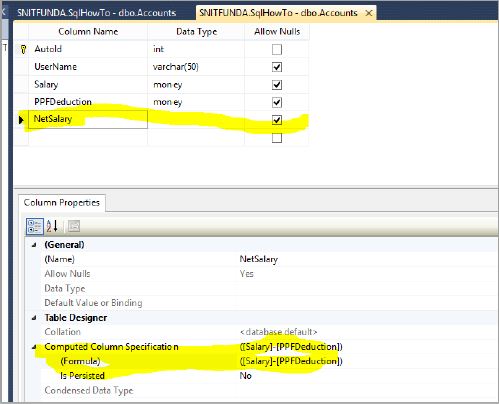
Computing New Columns in Snowflake for fun and profit
Sometimes to make our lives easier, we, as database engineers, can create a table that automatically tells us the answer as we need it – or at least how we tell it we want it. In SQL Server, we create what is called “Computed Columns.” You’ll notice that the “Earned Per Week” column doesn’t have…
-
Where We’re Going, We Don’t Need Limits
There is always a lot of fun things you can learn to do with Snowflake. Sometimes they’re even in the places you least expect to find anything even slightly different. Take for example LIMIT. Most of us have written the statement above – or something like it – a thousand times. But, in Snowflake, you…